Tailbone pain
Sit, move, and transition with less tailbone pain.
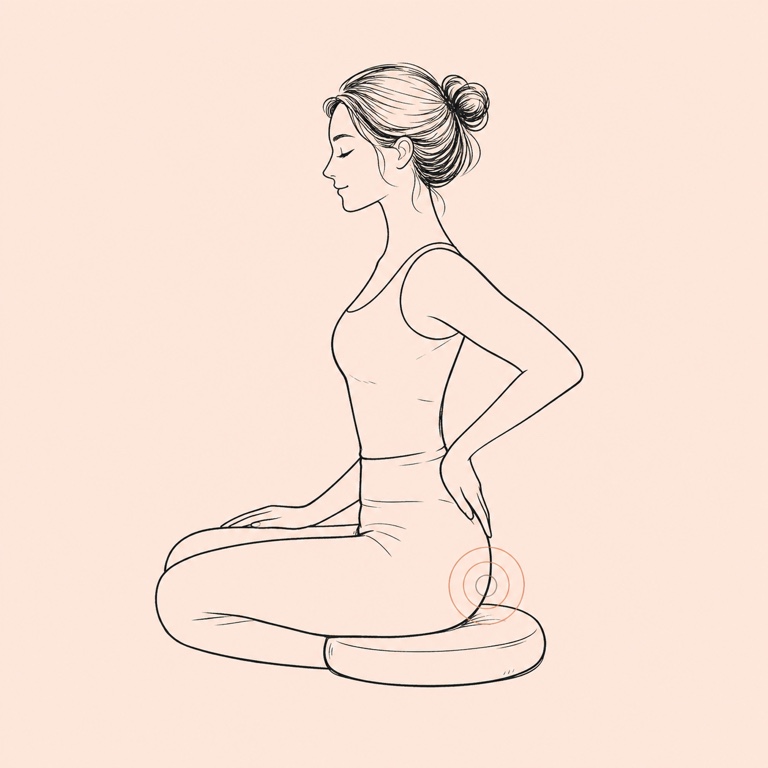
The coccyx connects with pelvic-floor muscles, ligaments, and surrounding movement systems. Care addresses the tailbone together with the pelvic floor, hips, spine, posture, and daily loading.
- Private one-on-one visits
- Personalized whole-body care
- Comfort and consent first
Understand the concern
What may be happening.
Coccydynia can follow a fall, direct injury, childbirth, prolonged sitting, arthritis, or repeated pressure. Several pelvic-floor structures attach around the coccyx, so protective muscle spasm, reduced mobility, hips, spine, breathing, and pressure distribution may all matter.
This page is educational and cannot diagnose a condition. Symptoms that are new, severe, changing, or medically concerning should be discussed with an appropriate healthcare professional.
Common signs and concerns
- Pain during or after sitting
- Pain moving from sitting to standing
- Symptoms after a fall, birth, or direct injury
- Pain with bowel movements or pelvic-floor tension
- Reduced tolerance for work, driving, or exercise
The whole-body view
Factors that may contribute or overlap
- 01
Previous trauma, childbirth, or repeated pressure
- 02
Pelvic-floor spasm or coordination changes
- 03
Coccyx, sacral, hip, spine, and sitting mechanics
Personalized physical therapy
How care may help.
Treatment follows the assessment. It is adjusted to your symptoms, medical guidance, preferences, and pace rather than a generic exercise list.
- 01
Adjust pressure
Improve sitting setup, posture, transitions, and choices that repeatedly load the coccyx.
- 02
Restore mobility
Use gentle manual work and movement for the pelvic floor, hips, spine, and tissues.
- 03
Rebuild tolerance
Progress strength and activity for work, driving, exercise, and everyday movement.
Your first visit
Start with a conversation, not assumptions.
Your first visit is a private, one-on-one conversation and assessment. We begin with your history, symptoms, routines, comfort, and goals, then explain what we notice and shape the plan with you. Nothing is performed without your understanding and consent.
Ask about your symptoms- Time to share your history and ask questions
- Movement, breathing, strength, and coordination assessment
- A clear plan shaped around your comfort and goals
Keep exploring
Related care and concerns.

A simple first step
Not sure what kind of care you need? Let's talk.
Use a free 15-minute consultation to share what is going on, ask questions, and find out whether Pelvic Elements is the right fit.